











Airway management is one of the most crucial aspects of patient safety in the operating room. For years, clinicians have traditionally relied on standard laryngeal mask airways (LMAs) for their ease of use. However, traditional “blind” insertions can sometimes lead to malpositioning, trauma, or inadequate ventilation.
What if you could eliminate the guesswork for the first time ever?
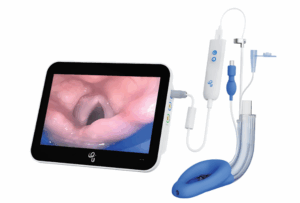 The Video Laryngeal Mask Airway (VLMA) represents a significant leap forward in airway technology via vision-guided insertion. By combining the ease of an LMA with the visual certainty of a videoscope, the VLMA offers a collaborative solution that empowers anesthesiologists and supports hospital executives in their quest for efficiency. In this post, we will examine the clinical studies surrounding the VLMA, explore the unique features that set it apart, and break down the cost advantages of adopting this innovative technology. In the words of an esteemed anesthesiologist with the US Naval Hospital, “3rd Generation VLMA’s will completely revolutionize the use of supraglottic airway devices and will become the standard for all laryngeal masks in the future.”
The VLMA Difference: Seeing Is Believing
The core innovation of the VLMA lies in its ability to transform a blind procedure into a visually guided one. While standard supraglottic airway devices (SADs) rely on tactile feedback, the VLMA integrates a camera channel that provides a direct view of the glottic opening.
Vision-Guided Insertion
Clinical studies consistently highlight the advantage of visualization. When clinicians can see the airway structures during insertion, they can navigate anatomical challenges with greater precision. This “vision-guided” approach significantly reduces the risk of epiglottic down-folding—a common complication with standard LMAs that can obstruct the airway.
One of the most supportive features of the VLMA is the ability to perform corrective maneuvers in real-time. If the device is not seated perfectly, the clinician does not need to remove and reinsert it blindly. Instead, they can view the monitor and adjust the mask’s position gently. This capability minimizes mucosal trauma and sore throats, leading to higher patient satisfaction scores post-surgery.
A sub-benefit, so to speak, resulting from being able to perform corrective maneuvers in real time is its impact on clinical education. The real-time video guidance transforms the way clinicians and trainees learn airway management. With a clear visual of airway structures during insertion, educators can demonstrate correct technique step by step, while learners instantly see the results of their actions. This immediate feedback accelerates skill acquisition, enhances procedural understanding, and fosters a collaborative environment where questions can be addressed promptly. Whether used in simulation labs or in the operating room, the VLMA helps standardize training, empowers teams with shared visuals, and builds confidence among providers at every level of experience.
The Two-Part Hybrid Design
Innovation meets practicality in the VLMA’s design. It consists of a disposable SAD component and a reusable videoscope.
- Disposable SAD: Ensures sterility and reduces cross-contamination risks, aligning with strict hospital hygiene protocols.
- Reusable Videoscope: Provides high-quality imaging without the high per-case cost of fully disposable video devices.
 This separation of components allows hospitals to maintain high standards of infection control while leveraging durable technology. Scan the QR code on the left side of the page to view a quick demonstration of the breakthrough device!
Clinical Advantages Over Competitors
When compared to competing laryngeal mask airways, the VLMA demonstrates clear superiority in clinical outcomes due to the unique video component. According to a case study published by the Journal of Clinical Monitoring and Computing¹, the data points toward a safer, more efficient experience for both the patient and the provider. Dr. Irene Osborne, known as the Airway Goddess” by her peers as an expert in airway management and Professor of Anesthesiology at Albert Einstein College of Medicine, Montefiore Hospital agrees, stating, “3rd Generation supraglottic devices provide higher levels of safety and performance.”
Improved Placement Accuracy
Standard LMAs have a documented failure rate due to malposition. Clinical data indicates that the VLMA achieves significantly higher first-attempt success rates directly resulting from vision-guided insertion. By verifying the position visually, anesthesiologists can ensure optimal seal pressure and ventilation immediately. This reduces the time spent troubleshooting the airway, allowing the surgical team to proceed with confidence.
Enhanced Safety Profile
Safety is paramount. Studies suggest that the use of VLMAs leads to a reduction in complications such as gastric insufflation and aspiration. Because the seal can be visually confirmed, clinicians can be sure that the airway is protected. This is particularly valuable in patients with difficult airways or obesity, where traditional anatomic landmarks may be obscured. By reducing the incidences of airway trauma and postoperative complications, the VLMA enables the clinical team to deliver the highest standard of care.
Cost Analysis: Investing in Efficiency
For hospital executives, the decision to adopt new technology often comes down to the bottom line. While the upfront cost of a video-enabled system may seem higher than a standard disposable LMA, the long-term cost analysis reveals a different story. The VLMA is designed to save hospitals money over time through three key avenues.
Reduced Complications and Liability
Airway complications are expensive. They lead to longer operating room times, extended recovery stays, and increased use of medications. By improving placement accuracy and reducing trauma, the VLMA helps mitigate these costly adverse events. Preventing just one serious airway complication can offset the cost of the system significantly.
Avoiding Intubation and Associated Sedation Costs
Avoiding unnecessary intubation can have a meaningful impact on both patient care and hospital costs. By managing the airway without progressing to full intubation, clinicians can often reduce or eliminate the need for deeper sedation, neuromuscular blockers, reversal agents, and other adjunct medications. This not only supports faster recovery and smoother emergence for patients, but also translates into lower pharmacy spending, reduced resource utilization, and more efficient workflows. Thus, it delivers clear financial and operational benefits for healthcare facilities.
Operational Efficiency
Time is money in the operating room. The high first-attempt success rate of the VLMA means less time spent securing the airway and faster turnover times between cases. When anesthesia induction is smooth and predictable, the entire surgical schedule benefits.
The Hybrid Model Advantage
Unlike fully disposable LMA’s which have a high cost-per-use, or expensive fiberoptic bronchoscopes that require costly repairs and sterilization, the VLMA hits the sweet spot.
- Lower Consumable Cost: You are only disposing of the mask, not the electronics.
- Durability: The reusable videoscope is robust and designed for repeated use, amortizing its cost in hundreds of cases.
This hybrid approach allows hospitals to upgrade their standard of care to video-level safety without blowing the budget on fully disposable electronics.
Closing Thoughts
The Video Laryngeal Mask Airway is more than just a new device; it is a partner in patient safety. By integrating vision-guided insertion into the laryngeal mask, the VLMA bridges the gap between simplicity and security. The clinical studies speak for themselves: better placement, fewer complications, and enhanced visual control. For healthcare organizations, the VLMA offers a pathway to improve clinical outcomes while managing costs effectively. We believe that innovation should be accessible and practical. Adopting the VLMA is a step toward a safer, more efficient future for airway management—one where clinicians are empowered to see clearly and act confidently.
Are you ready to enhance your airway management strategy? Explore how the VLMA can fit into your clinical practice and get in touch with us today!
¹Journal of Clinical Monitoring and Computing (2022) 36:921–928